

Artist Supplies and Artwork Equipment for the Art Studio
Explore the relationship between the artist and their art materials and studio equipment. High quality art supplies are crucial to the professional artist working in an art studio workspace. As a fine art painter, discover what top artwork brands I choose to work with and why.
Paints, Brushes, Mediums, Canvases, Panels & Easels
The one thing that matters most to me, as an artist, is accessibility to good quality paints and materials. Obtaining art products that have been designed, manufactured well and tested professionally means I can have peace of mind when it comes to creating artworks for my clients, who expect that something 'special', in terms of quality and build. Painting with good quality lightfast pigments, sourced from reputable locations, onto a well-made canvas or artist panel, ensures longevity of any artwork — as long as it is looked after, stored and displayed correctly. Quality inspires confidence, so it is helpful, and good practice, to have high standards when it comes to choosing artist materials.


Oil Paints: Which Ones Should I Choose?
When it comes to artist materials, I've learned that everyone develops their own set of favourites. I'm no different. Once I discover a paint that feels just right under the brush, I rarely stray far from it. There's something comforting about knowing how a paint will move, how it will mix, how it will settle on the canvas. It becomes part of the rhythm of painting — familiar, reliable, and deeply personal.
Old Holland Paints
Old Holland oil paints have always held a special place in my practice. There's a richness to their quality that makes them a joy to work with. They glide across the canvas with a buttery smoothness, never too stiff or too runny, just the right consistency to bring a painting to life. Their colour range is vast, but as a maritime painter, I find myself reaching again and again for their Blue-Grey, Warm Grey and Violet Grey (the last two, I mix to create a nice cloud shadow hue). Those tones capture the shifting moods of the sky with an authenticity I can't seem to find elsewhere.
Michael Harding Paints
I also have a lot of admiration for Michael Harding oil paints. They have a luminous quality that feels almost alive. Among their range, Kings Blue Light has become an indispensable colour for me. Whenever I paint Mediterranean skies, this shade delivers that perfect depth — clear, vibrant, and expansive. It's one of those colours that can transform a painting instantly, pulling the viewer into the warmth of a sunlit horizon.
Winsor and Newton Paints
Then there are the Winsor and Newton Griffin Alkyd oils. I find them especially useful when I need faster results without compromising too much on colour or texture. Their quicker drying time makes them practical for projects that demand a bit more urgency, and they offer a solid palette of colours to work with. French Ultramarine, Olive Green, Paynes Grey, and Titanium White are among my favourite colours. Together, they give me a balanced toolkit for building depth, contrast, and atmosphere in a painting. Yellow Ochre is another favourite.
Each of these brands has its own character. Choosing paints isn't just about colour; it's about how they make me feel as I work. Over time, these favourites have become trusted companions in the journey of translating vision into paint.


Painting with Acrylics
I used to spend many hours painting maritime and coastal scenes with acrylic paints, and it wasn't just out of preference — it was often out of necessity. When galleries or exhibitions came calling on short notice, acrylics became my trusty ally. They dried so quickly, which meant I could build up a painting, varnish it, and have it ready for display in far less time than if I had worked in oils. Of course, that speed came with its own set of challenges, but I grew to love the rhythm of working with a medium that demanded both decisiveness and spontaneity.
For me, the quality of the paint has always mattered. I gravitated towards Old Holland New Masters Classic acrylics because they were simply dependable — richly pigmented, beautifully crafted, and consistent in their finish. There's something reassuring about using materials from a brand with such a long history. I also experimented with Schmincke PRIMAcryl, especially their Titanium White, which I found to be a dream when I needed a strong, opaque white paint. Winsor and Newton, too, offered a vast palette, and their wide range of colours gave me flexibility when I wanted to push beyond my usual seascapes.
New to Acrylic Paints?
When I first began using acrylic paints, the quick-drying nature of acrylics felt like a race against time. I knew I had to work fast, and at first, it was a bit intimidating. While I knew about the slow-drying mediums available, I rarely reached for them. Instead, I embraced the pace and learned how to make it work for me. That urgency taught me to be bold, to trust my instincts, and to let the brushstrokes flow without hesitation.
What I particularly loved was the ability to layer. Acrylics allowed me to build depth through glazes, almost like oils but with the added advantage of a quicker turnaround. The sea, with all its shifting blues and greens, came alive on my canvas as I stacked layers, one over the other. And there was always a certain practicality, too — no need for smelly solvents. Just water. Clean brushes, clean palette, clean finish. It's such a simple, forgiving medium, and yet it can produce results as rich and nuanced as any other, so it's worth persevering with them.
Once you've become used to working with acrylic paints and follow the important process of applying the underpainting first, then building subsequent layers on top of it, and then adding your detail and finally applying glazes to enrich the colours further, your paintings will look impressive.


Artist Brushes
When I'm painting coastal artworks or maritime scenes, I almost never reach for a brush wider than an inch. Even when I'm working on a large canvas or panel that requires broad areas of coverage, I find that smaller brushes give me the control and subtlety I need. My favourite choice, especially for skies, is a filbert brush. It has just the right shape — not as blunt as a flat and not as pointed as a round — so it lays down paint smoothly without leaving the heavy, distracting marks that broader brushes can leave behind.
After applying the first layers of paint, I have a little ritual I follow. I clean the filbert, wipe it dry, and then gently, slowly, sweep it across the surface at a slight angle. This softens any visible brush marks, helping the sky or sea feel more natural and less 'worked'. It's a small step, but it makes a big difference. Some paints, once dry, catch the light and reveal every stroke in the sheen on their surface. For me, a painting often looks more harmonious when those marks aren't shouting for attention — unless, of course, the strokes themselves are intentional and meant to be part of the story.
What Brushes Are Good For Painting Clouds?
When I'm painting clouds, I keep things simple: a half-inch filbert for the base, layering the colour to give them shape and volume. Then, I switch to a smaller round brush for the highlights, carefully softening their edges to keep the forms airy and natural. It's a gentle balance between structure and softness, and the brushes allow me to control that well. I take a similar approach when I'm painting water. I begin broadly, again with a half-inch filbert, blocking in the base layer. Then, as the scene develops, I move to a medium and then a small round to define the waves and ripples, forming the details bit by bit.


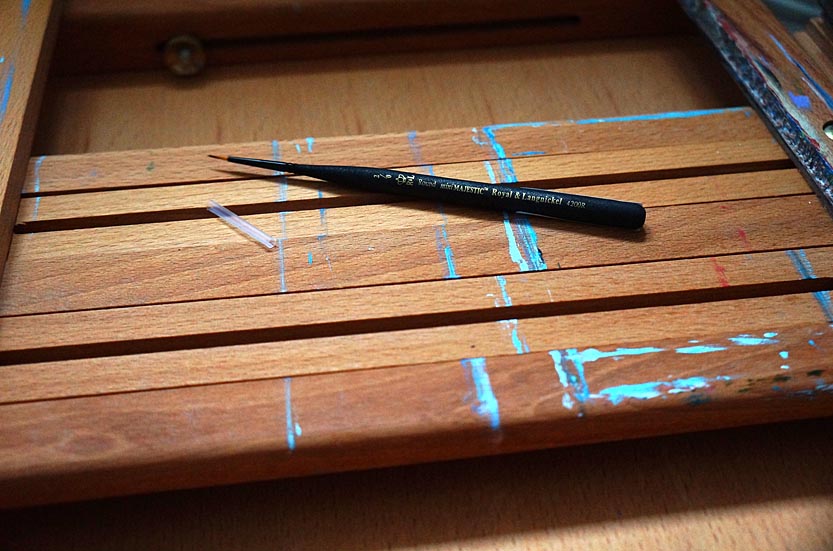
There are times when I've reached for a fan brush, particularly when painting foliage in the foreground of landscapes. They can create a beautiful texture for trees and bushes, capturing that organic scatter of leaves. But when it comes to skies, I avoid them — clouds, to me, need a softness that a fan brush just can't provide.
And then there are palette knives. To be honest, I use them very little. If you look at the images of my brush collection, you'll see just one small palette knife tucked among my brushes. Brushes simply suit the way I like to work — they give me the flexibility and control I require when painting the sea or sky. That said, every artist has their own way of working, and I think it's wonderful how tools can shape the personality of a painting. For me, brushes are the heart of my toolkit, and I wouldn't want to paint without them.
Solvents, Mediums and Varnish
Here is something that has completely changed the way I paint: Green for Oil. It is a beautiful new range of mediums and thinners for oil painting. It doesn't use any harsh spirits like turpentine. Instead, it's made with gentle, natural blends of fatty acids and plant esters.
What I love most, is that Green for Oil was created as a safer, greener alternative, designed with both the artist and the environment in mind. Every ingredient belongs to the bio-solvent family, crafted from renewable raw materials that occur naturally. These are responsibly sourced — whether from plants or minerals — always with care for environmental balance and health standards.
Even with this eco-conscious formula, the mediums behave just like the traditional ones, giving you the same results. To me, it feels like the best of both worlds — keeping the art alive, while being a little kinder to myself and to the planet.


Glazing an Oil Painting
When I apply a glaze, it is as though the painting suddenly comes alive. A glaze enriches the colours so beautifully: if I find an area looking flat or a little dull, just a thin glaze transforms it. I often turn to Winsor and Newton's glaze for my oil paintings; I find it consistent, dependable, and always rewarding to use.
Varnishing an Oil Painting
When it comes to finishing a painting, varnishing is something I never neglect to do. To me, it's a way of both protecting and honouring the work I've put in. Varnish has this wonderful way of unifying a painting, tying together all the passages of colour while adding a subtle sheen. The key, though, is timing — it's important to wait until the painting has had the proper time to dry before applying a final varnish. Oils, as you probably know, like to take their time.
Of course, not every painting can sit undisturbed for a full year to dry before varnishing. In those cases, I often use a retouch varnish. This is such a helpful in-between — it allows the paint layers beneath to continue drying, while still giving a degree of protection to the surface. What I particularly like about retouch varnish is the way it revives the colours, bringing back richness and vibrancy, almost as if the painting has been refreshed.
For me, Winsor and Newton varnishes have always been reliable companions in this process. They're easy to work with, and I trust the results they give me, whether I'm glazing, retouching, or applying that final protective coat. There's a real peace of mind in knowing the materials I use will support my paintings for years to come.
Substrates
When I first began painting, my natural instinct was to reach for a canvas. There is something about the woven texture beneath the brush, the way it catches paint and gives a subtle rhythm to each stroke. For years I worked on professional stretched canvases and sturdy canvas boards, and they served me well. The gentle tooth of the surface encouraged me to layer, blend, and sometimes even let the weave show through as part of the composition.
Artist Panels
More recently, though, I have taken an interest in a different surface altogether: artist panels. I often use Jackson's large, pre-primed panoramic panels, just 3mm thick, and I have found them to be perfect for my seascape originals. Their proportions feel almost as if they were designed with wide horizons and sweeping waves in mind. The smoother surface allows me to glide across the panel with finer detail, and it gives the paint a chance to really sing without the interference of texture.
It is not that I have abandoned canvas — I still cherish its character — but art panels give me something new: a clarity and precision that feels fresh every time I start a painting. They are sturdy, beautifully made, and versatile, whether I am working in oils or acrylics. The lack of texture means I can achieve subtle gradients in skies or crisp edges along the crest of a wave, details that sometimes get softened when working on canvas.
When it comes to size, I have discovered two formats that feel like home: 24 x 36 inches and 18 x 36 inches. These dimensions seem to breathe just the right amount of space into a composition. They let me explore both intimacy and expanse — whether it is the restless energy of a stormy sea or the calm stillness of a wide horizon. Each time I set one of these panels on the easel, it feels like opening a window to another place.


Artist Easels
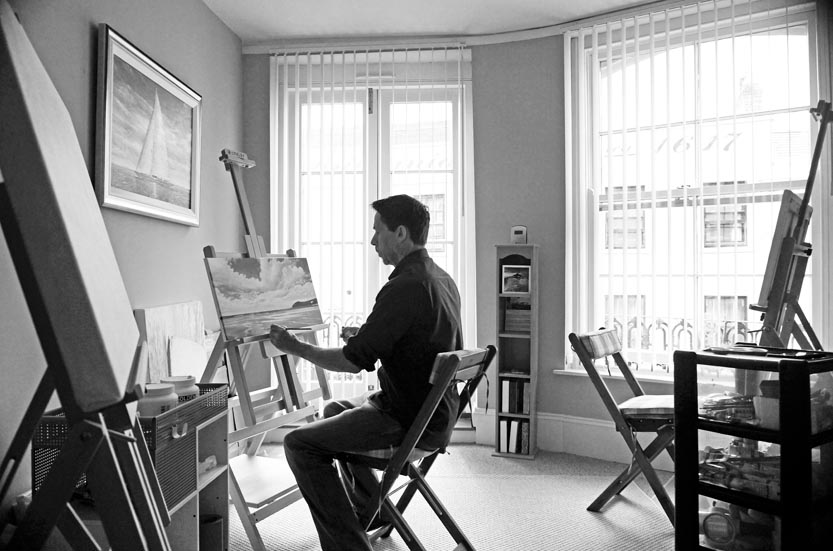
I still remember my very first easel — a simple little table-top easel that carried me through my early years of painting. It may not have been grand or imposing, but it did exactly what I needed it to. I could work comfortably on small to medium-sized canvases, and the best part was how easy it was to take with me wherever I wanted to paint. Lightweight and portable, that modest easel witnessed countless beginnings and experiments on canvas.
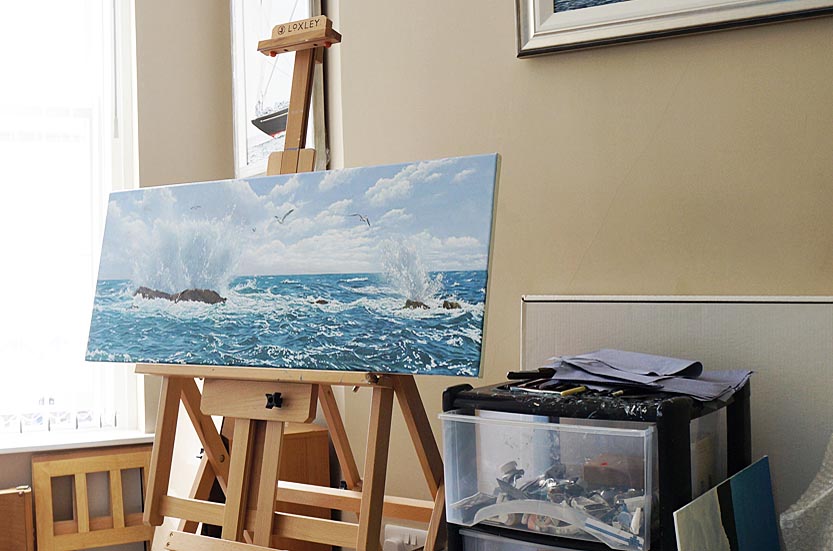
My first studio easel was a Loxley Essex Studio easel. I liked it so much that I eventually ended up with three of them in my studio at one point. When I downsized to a smaller space, I passed one along to an artist, but the remaining two still stand proudly with me. My very first Loxley has been with me for over twelve years now, and it's never let me down.
What I adore about this easel is its versatility. I can tilt it flat when I need to varnish a painting, or keep it upright for my larger canvases. The built-in shelf is a thoughtful detail, offering a perfect spot to rest brushes or tuck away supplies. It is sturdy, reliable and feels as if it was designed to grow alongside an artist, adapting to whatever stage of creativity they're in. For me, it is more than just a piece of studio furniture — it is a partner in the process, always steady, always ready for the next painting.


Artist Drawing Equipment
Every artist has their faithful little tools — the ones we simply can't imagine working without. For me, pencils and rulers are those essentials, always close at hand no matter what I'm creating. There's something grounding about starting with a simple sketch, letting the lines guide the flow of a bigger idea. I own a few sets of Derwent Procolour pencils and Lyra Rembrandt Polycolour pencils. While I mostly use them when sketching, I've also combined them on one occasion with my acrylic work. Pencil gives more control, sharpness and is suited for defining fine lines and technical details, especially on maritime paintings.


Summary
I hope this blog post has been helpful. When I first started painting, I knew quite early on how much of a difference good quality art supplies could make to the creation of an artwork. Using reputable materials isn't just about luxury — it is about giving myself the right tools to fully express what I see and feel, and more importantly, to make the right impression to clients and galleries at a professional artistic level. High-quality paints have richer pigments that bring out vibrant colours, brushes hold their shape better, and a well-made canvas can handle all the layers and textures I want to play with. Investing in reliable materials makes the creative process smoother, more enjoyable, and ultimately helps me create work that truly reflects my vision and will last for hundreds of years.
Intellectual Property
All images (including those featuring an online image watermark), text, and design elements on this website are the intellectual property of Mark Woollacott unless otherwise stated. Unauthorized copying, reproduction, distribution, broadcasting or use of any content — whether for commercial or personal purposes — is strictly prohibited. Please respect English and international copyright law.