

Commissioning a Yacht Painting
The images you see here capture the journey of a commissioned painting as it evolved, step by step, from the very first brushstrokes to its final completion. This piece — a Jeanneau Sun Odyssey 42DS yacht anchored just off the coast of Nice in Southern France — was a truly rewarding project that unfolded over the course of ten weeks. For best viewing results, it is recommended you view this page on a desktop PC screen, in order to appreciate the detail in the images.
How an Oil Painting is painted
Working on a canvas measuring 65 cm by 95 cm, I carefully built up the composition, layering colour and detail to bring the yacht and its serene surroundings to life. Each stage of the process reflects both the technical precision required for a subject like this and the personal joy I find in painting maritime scenes.
Making a Start
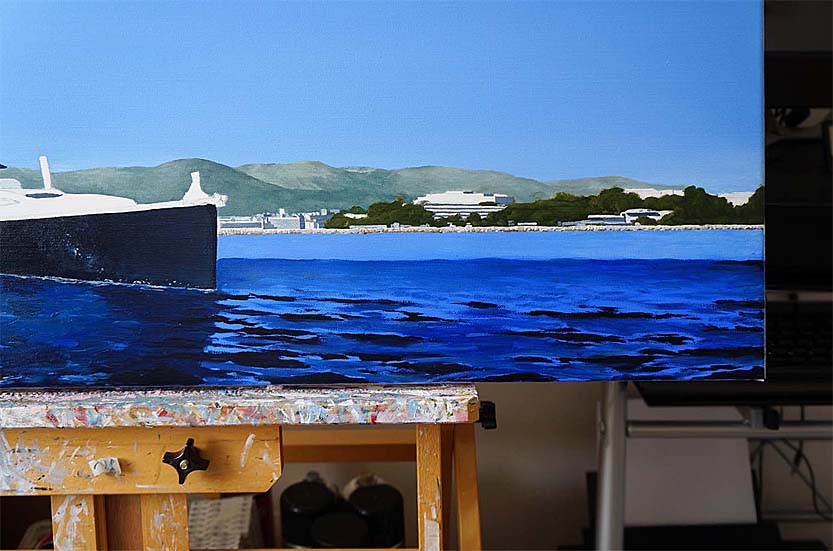
Once I have carefully drawn the various elements of the yacht onto the canvas, I begin the painting process by preparing a mixture of oil paint and professional artists' thinners. This allows the pigment to flow more freely across the primed surface, creating an almost fluid first layer. It is at this stage that the painting starts to take on its earliest sense of depth and character, the primed canvas absorbing these initial tones as the foundation for all that will follow.
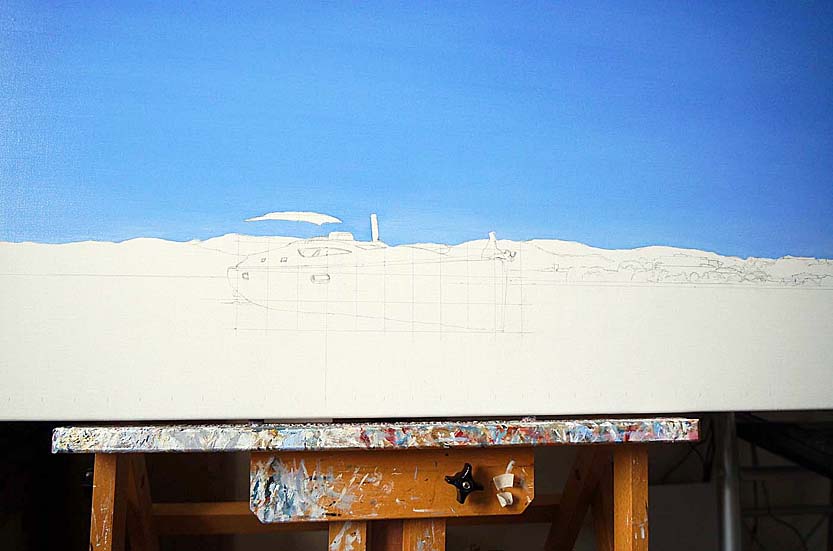

The Underpainting
The first layer I apply is known as the underpainting. This stage is always fascinating, as it begins to lay the foundation for everything that will follow. The paint here is applied thinly, almost like a whisper of what is to come, establishing the base forms and relationships between the different elements of the composition.

At this early point, the brushstrokes remain visible and deliberate, giving the surface an energy and texture that will later be softened, layered over, or subtly revealed through the finished work. With each wash of colour and every careful stroke, I sought to reflect not only the yacht's elegant form but also the shimmering light, the expanse of sea, and the sense of calm that belongs to this place. The process felt less like constructing an image and more like uncovering it — allowing the painting to reveal itself as time and patience shaped its final presence.
Oil Painting Methods
When I work in oils, I always follow the principle of 'fat over lean'. It's a traditional method that guides the way paint layers are built up, and it makes a huge difference to both the stability and beauty of the finished work.
In simple terms, the 'lean' layers come first — these are thinner mixtures of oil paint with more solvent (I use the new plant-based artists' solvents as they are almost odourless compared to traditional solvents and far better for the environment), which dry more quickly and provide a solid base. Oil paintings have always used plant-based oils, such as linseed oil, poppy oil, walnut oil, for many centuries. As a professional artist, I am committed to using artist products (e.g. paint pigments, mediums, thinners, brush cleaners) which are sourced through natural and ethical processes and use plant-based oils while still maintaining high quality results.
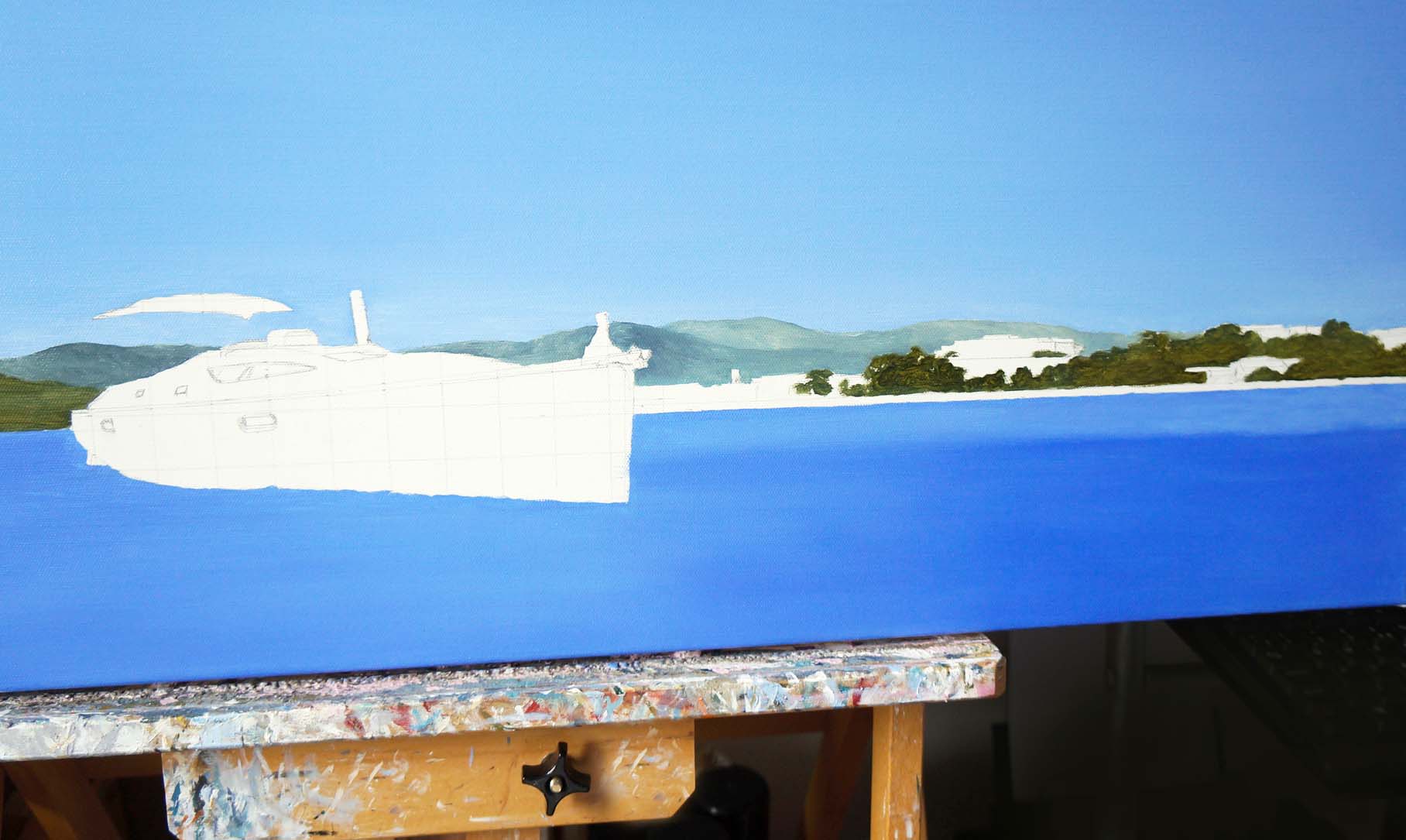
Painting with Oil Paints
As I continue to build the painting, each new layer becomes progressively 'fatter', meaning I add more oil and less solvent to the paint. These richer, oilier layers dry more slowly and remain more flexible, which prevents cracking over time. By respecting this balance, the painting develops both in its physical surface and in the way the light plays through the transparent glazes and colours.

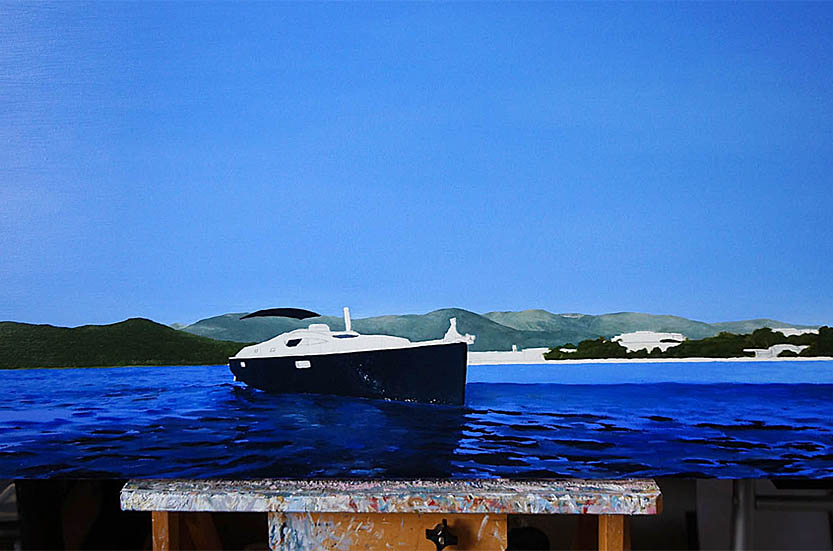


Painting is a Patient Process
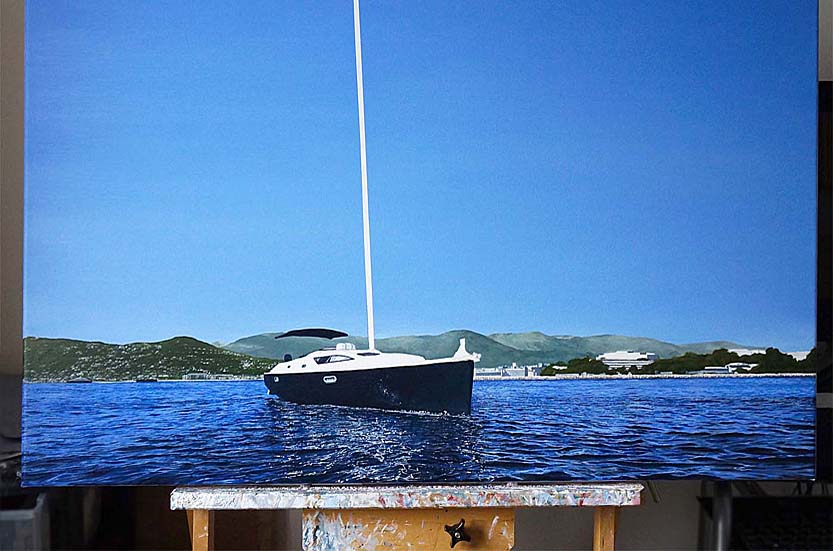
After the underpainting has dried sufficiently, I begin to build the mid-layers. At this stage, I start introducing more body to the paint — still mindful of keeping it lean compared to what will follow, but with enough richness to define form, light, and shadow more clearly. These layers are where the painting starts to take on its true character. I refine shapes, deepen tones, and begin to weave in subtle variations of colour that hint at the final atmosphere.
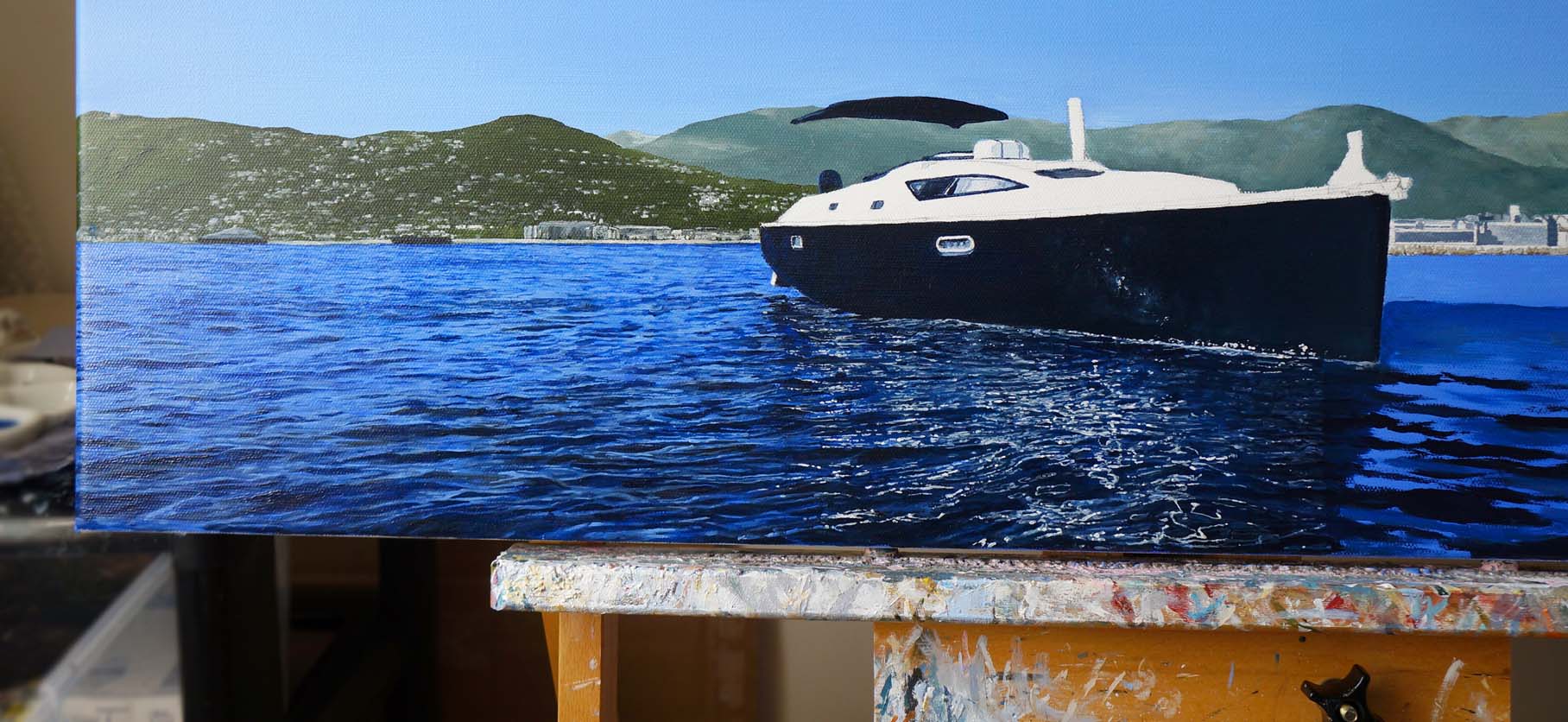
Applying an Artist's Glaze on the Painting
Once the mid-layers have dried sufficiently, I move on to glazing. For me, glazing is one of the most magical aspects of oil painting. By applying thin, transparent layers of colour — always fatter, with more oil — I can alter the depth and luminosity of what lies beneath. A glaze can warm a shadow, brighten a reflection, or create the shimmering quality of light on water. Layer by layer, the painting gains a richness that feels almost alive, as though the light is not merely resting on the surface but glowing from within.

Working this way, from lean to fat, from solid form to luminous veil, allows the painting to grow gradually, with each stage enriching the one before it. It is a patient process, but one that rewards both the painter and the viewer with a sense of depth and life that oil paint can achieve.


Attention to Detail
As the painting develops, I gradually refine it with more detail. Each stage adds clarity, sharpening the image and giving it greater presence.
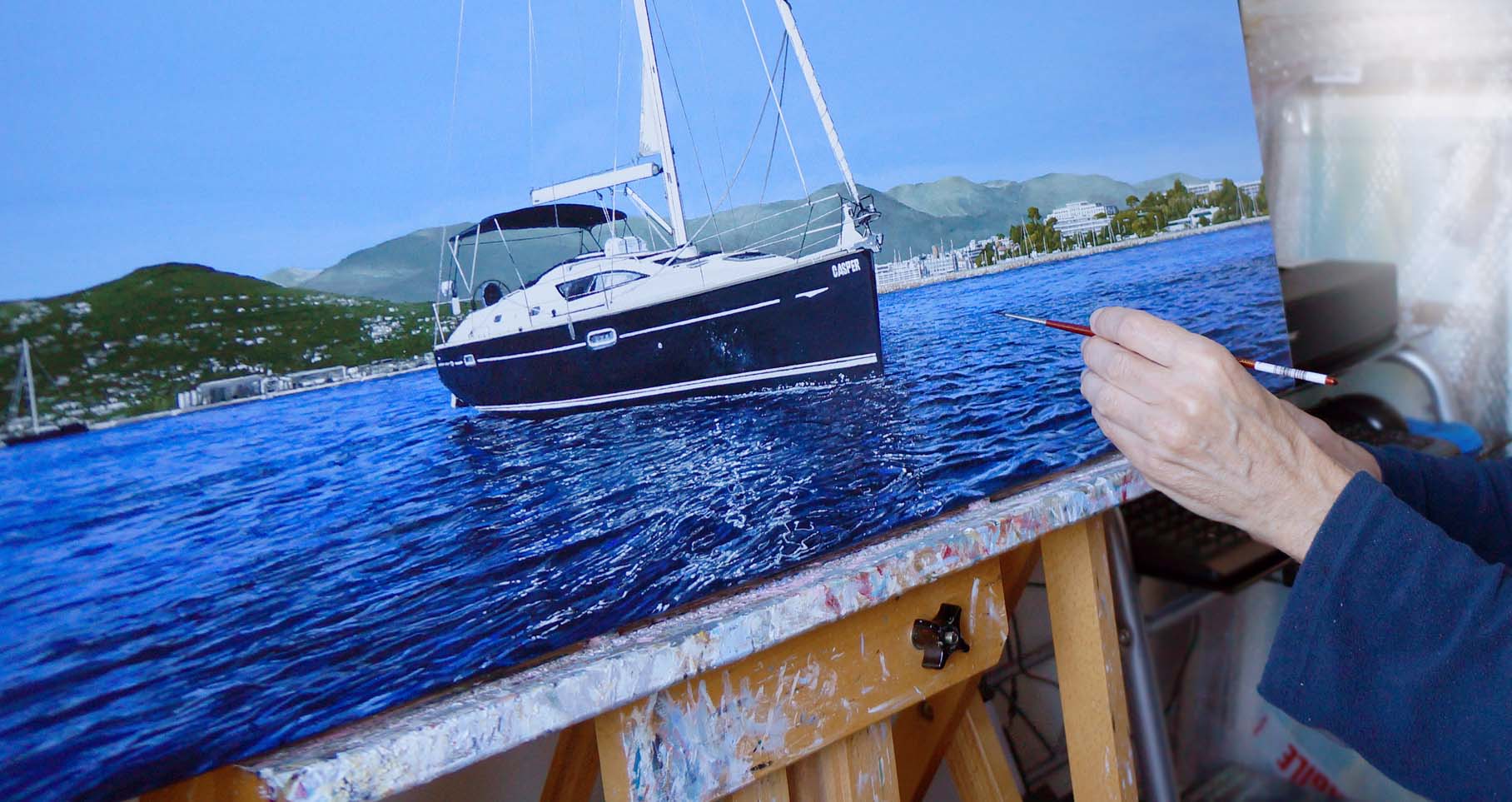
For me, it's in the details that the painting truly begins to come alive — the fine lines, the subtle highlights, the careful textures. These small touches are what create a sense of realism, drawing the viewer in and making the scene feel both believable.


The Completed Painting
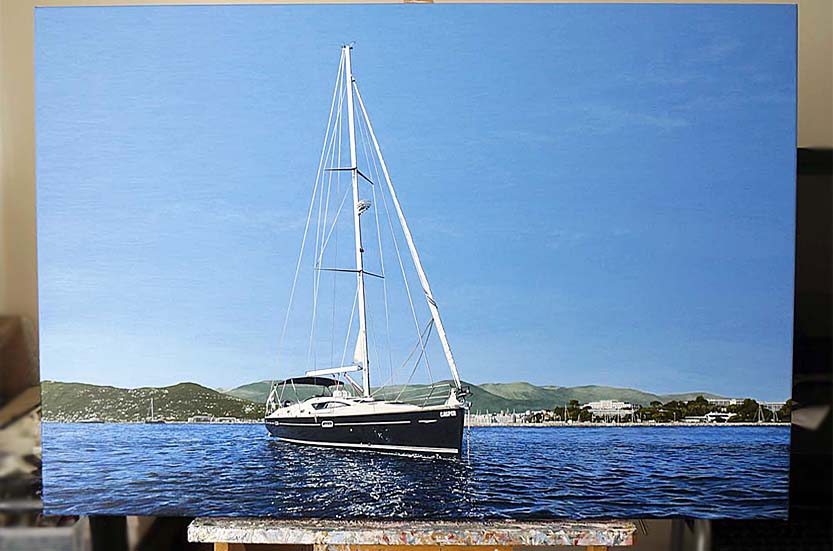
Once an oil painting is complete, I allow it to rest and dry for several weeks before applying a protective coat of retouch varnish. This not only safeguards the surface but also enhances the depth and vibrancy of the colours, giving the work a unified finish.
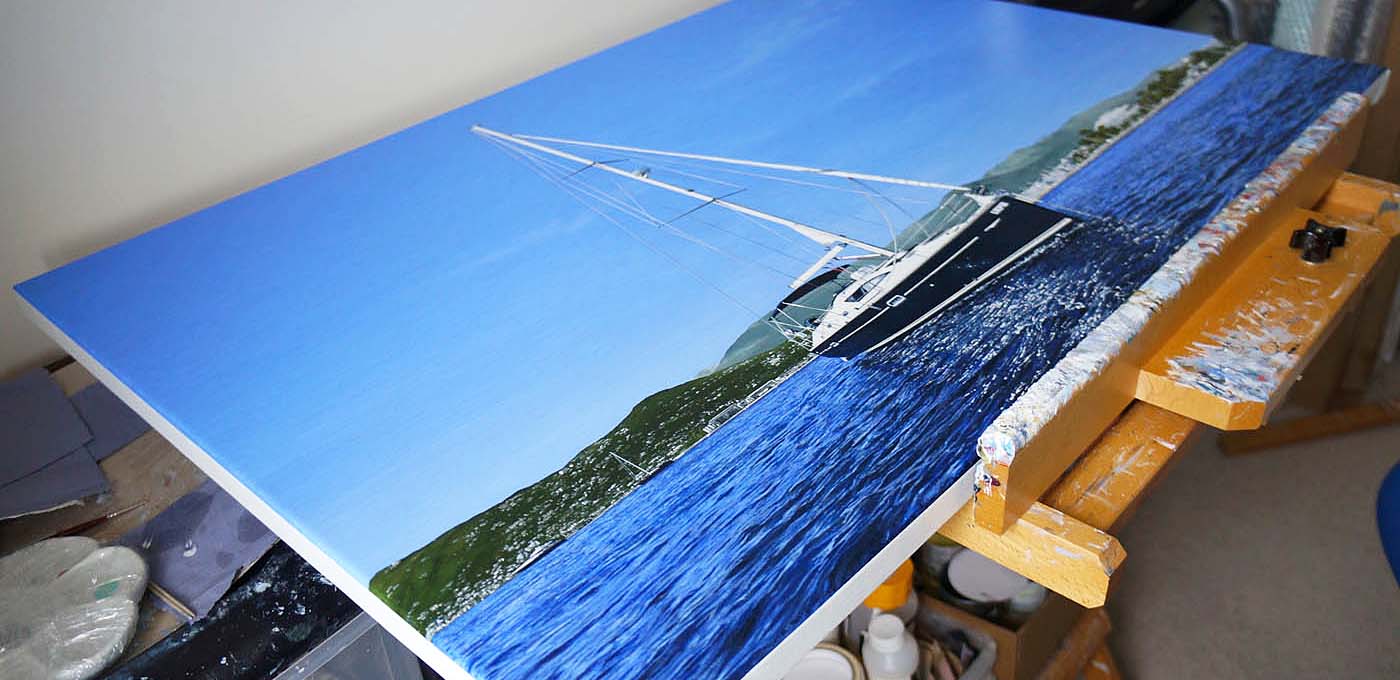
For me, this stage carries a quiet sense of closure. After so many hours of layering, refining, and bringing the image to life, I often pause to reflect on the journey of the painting, which can take several months to complete.

There is always a feeling of achievement, but also something deeper — knowing that what I've created is not just a painting, but something personal and meaningful for the person who commissioned it. As an artist, it means a great deal to know that my work can bring joy, hold significance, or preserve a memory in a way that belongs uniquely to them.
Painting Commissions Tailored to your Requirements
Click here for helpful information about how to arrange a painting commission...
When you commission a painting from me, it's all about creating something that feels truly personal to you. I take the time to understand your ideas and vision so that the artwork reflects your taste and fits beautifully into your space.
Mark Woollacott is a member of Artists' Union England, the trade union for visual, applied and socially engaged artists www.artistsunionengland.org.uk
Frequently Asked Questions
How long does a commissioned yacht painting take to complete?
A typical yacht commission takes around 8 to 12 weeks to complete, depending on the size of the canvas, the level of detail, and my current schedule. Each painting is created with care and precision, ensuring the highest quality.
What information do I need to provide to commission a yacht painting?
Clients usually provide clear photographs of their yacht, along with any preferences for setting, background, or mood. I am also happy to discuss ideas with you to create a composition that reflects your vision.
What canvas sizes are available for a boat painting commission?
I offer a range of canvas sizes, from smaller works to large statement pieces. A popular size for yacht commissions is around 24 x 36 inches, but custom sizes are also available depending on your needs.
Do you ship yacht paintings internationally?
Yes, smaller paintings. All artwork is fully protected and insured to ensure it arrives safely. But you will be fully responsible for paying all applicable customs tarrifs and taxes when the artwork arrives at customs, in your country — which could be 10% or higher of the actual value of the artwork. So please be aware of these extra costs before you consider commissioning a painting from me.
How much does it cost to commission a yacht painting?
The cost of a commission depends on the size of the canvas and the level of detail required. Please visit the 'Painting Commissions' page on my website or contact me directly for a personal quote tailored to your project.
Can I request specific details, such as the yacht's location or background scenery?
Absolutely. Many clients like their yacht to be shown in a favourite location, such as the Mediterranean, or at anchor with a particular view. I will work closely with you to include meaningful details in the painting.
Intellectual Property
All images (including those featuring an online image watermark), text, and design elements on this website are the intellectual property of Mark Woollacott unless otherwise stated. Unauthorized copying, reproduction, distribution, broadcasting or use of any content — whether for commercial or personal purposes — is strictly prohibited. Please respect English and international copyright law.